Vaginal Discharge Colors Decoded: What Different Colors Can Mean
Dec 10, 2025 Grissolife Team
The Essential Role of Vaginal Discharge
Helps Prevent Discomfort
Vaginal discharge acts as a natural lubricant. It reduces friction between skin surfaces during daily movement, which helps prevent irritation and unnecessary pain.
Plays a Role in Fertility
Discharge also supports the body when you’re most fertile. Around ovulation, it becomes thinner and more slippery, creating an environment that makes it easier for sperm to travel—naturally boosting the chances of conception.
Keeps the Vaginal Microbiome in Balance
A healthy discharge helps maintain the balance of good bacteria in the vagina. Lactobacillus bacteria, which are normally present, turn sugars into lactic acid, helping keep the area balanced and healthy.
Reflects Your Health
Changes in discharge—its color, texture, or smell—can offer clues about what’s going on with your body. It’s often one of the first signs when something in the vaginal environment shifts.
The Color of normal vaginal discharge and abnormal vaginal discharge
Normal vaginal discharge color
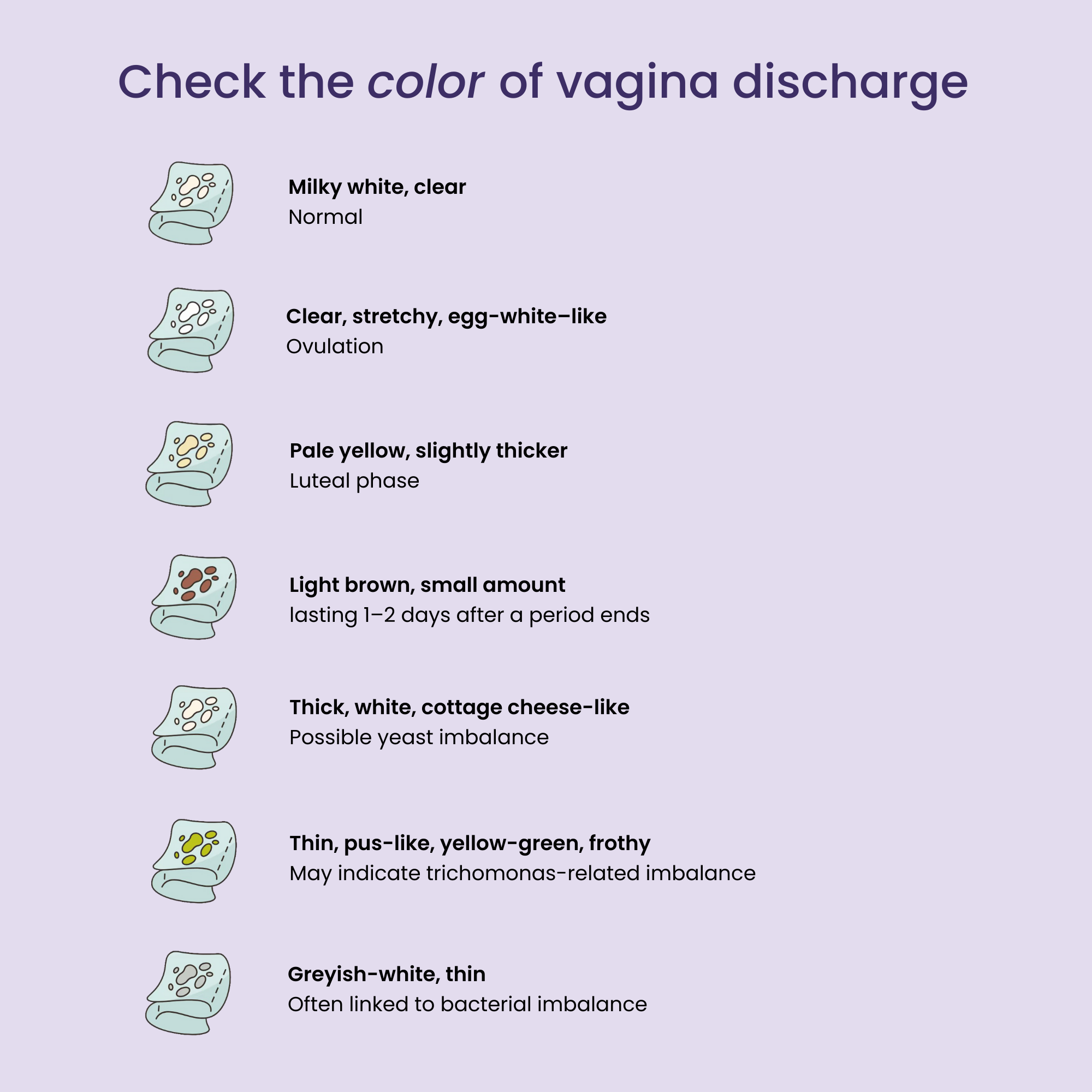
Milky white or clear, small in amount, and odorless--Normal
Produced by the vagina and cervix, this discharge helps lubricate the vaginal canal and provides a natural defense against bacteria. It is typically minimal, odorless, and part of the body’s normal protective mechanism.
Gently rinse the external vulva with warm water daily and change into clean cotton underwear regularly. No medication or excessive cleansing is needed.
Clear, stretchy, and mucus-like, with a slightly increased amount--Ovulatory phase
During ovulation, rising estrogen levels make cervical mucus thinner, clearer, and more elastic. This “stretchy” consistency helps facilitate sperm movement, so the amount may be higher than usual.
This is a normal physiological change. If trying to conceive, this period is associated with a higher chance of pregnancy. Change underwear regularly and avoid prolonged moisture to help reduce bacterial growth.
Light yellow, slightly thick in consistency, and odorless--Luteal phase
After ovulation, the body enters the luteal phase, during which progesterone levels rise. This causes cervical mucus to become thicker, slightly yellow in color, and lower in volume compared with the ovulatory phase. It typically has no odor and is considered normal.
This is a normal physiological change and does not require special treatment. Try to avoid excessive spicy foods and reduce unnecessary physical irritation.
Brown in color, light in amount, typically lasting 1–2 days--Residual blood mixed with discharge after menstruation
After menstruation, a small amount of residual menstrual blood may mix with cervical mucus. As the blood oxidizes, it appears brown. The amount is usually light and disappears quickly.
If it lasts only 1–2 days and there is no abdominal pain or unusual odor, it is generally not a concern. If it continues for more than 3 days or the amount increases, it’s advisable to check for possible cervical-related issues.
Abnormal vaginal discharge color
Thick white discharge with a cottage cheese-like or clumpy texture, possibly accompanied by itching--Yeast infection
An overgrowth of yeast in the vaginal environment—often associated with factors such as prolonged antibiotic use, wearing tight or non-breathable underwear, or elevated blood sugar—can disrupt the natural balance of the vagina.
Avoid scratching the itchy area to prevent further irritation. Seek medical evaluation, such as a routine vaginal discharge test, and follow a healthcare provider’s guidance for appropriate antifungal treatment to help reduce recurrence.
Thin, purulent yellow-green discharge that may appear foamy, with a noticeable foul odor--Trichomonas infection
Trichomonas can spread through sexual activity and, less commonly, through indirect contact with shared items such as towels or public bathing facilities. Once it enters the vagina, the organism can multiply and lead to inflammation.
Both partners should be evaluated and treated to help prevent reinfection. Seek medical care and follow a healthcare provider’s guidance for appropriate management. Avoid sexual activity during treatment, and wash personal underwear separately to reduce the risk of cross-contamination.
Grayish-white, thin discharge with a fishy odor, often more noticeable after intercourse--Bacterial vaginosis / BV
A decrease in beneficial vaginal bacteria and an overgrowth of harmful bacteria can disrupt the natural microbiome, leading to an imbalance that produces a fishy odor. Sexual activity may further disturb the vaginal flora, making the odor more noticeable afterward.
Avoid using antibiotics on your own, as this may worsen the imbalance. Seek medical evaluation and follow a healthcare provider’s guidance on treatments that help restore the vaginal microbiome. Refrain from frequent internal douching or using cleansing solutions inside the vagina, as this can disrupt the normal environment.
Keep the vagina clean & avoid abnormal discharge
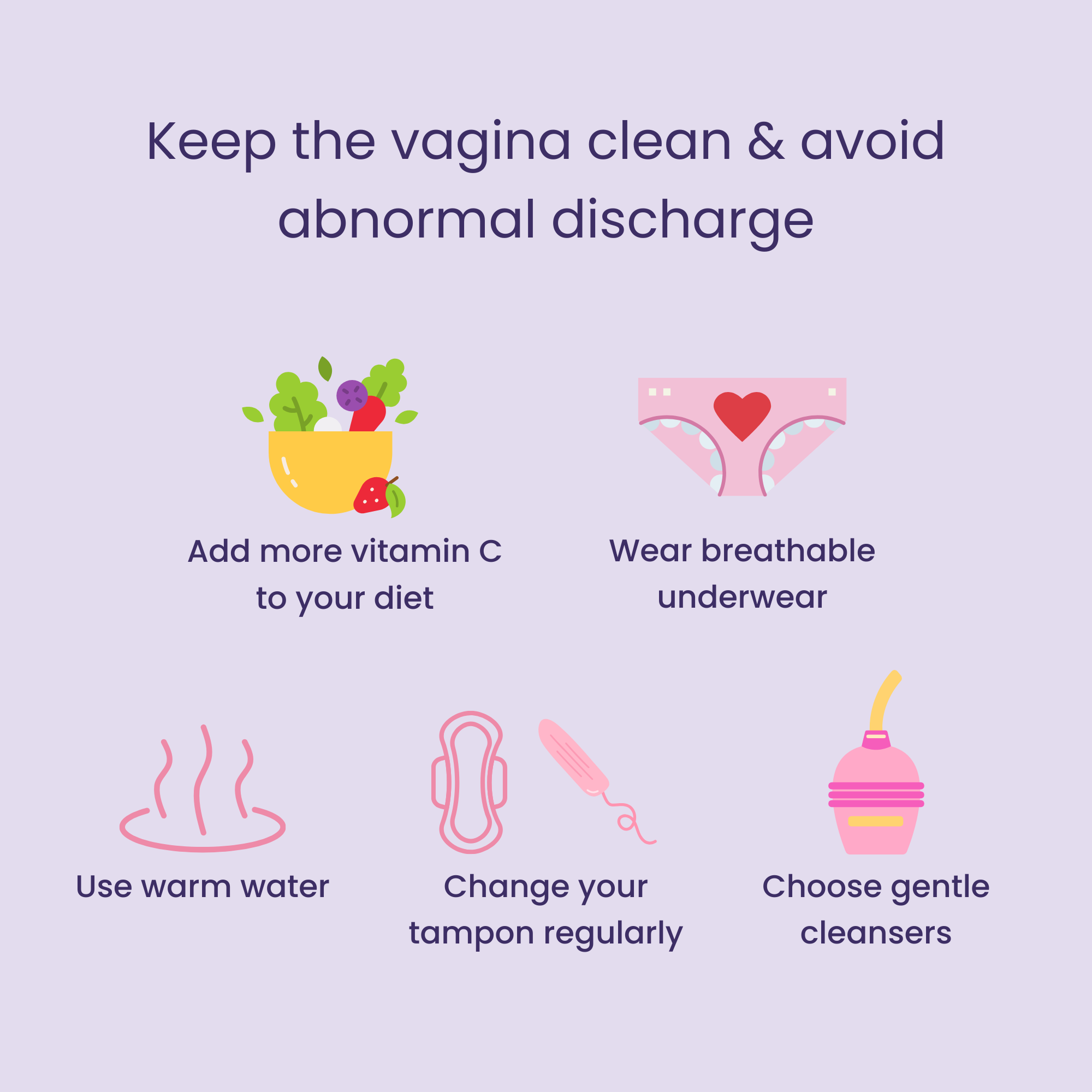
Use warm water
Gently wash the vulva with warm water every day. Avoid water that’s too hot or too cold—hot water can disrupt the skin’s natural protective barrier, while very cold water may cause discomfort.
Choose gentle cleansers
If you prefer using a cleanser, pick one that’s mild and specifically formulated for intimate care. Stay away from products with strong fragrances or harsh chemicals, as they can upset the natural pH balance.
Wipe from front to back
When cleaning or wiping, always move from front to back. This helps keep bacteria from the anal area away from the vagina and lowers the chance of infection.
Avoid over-cleansing
Keeping the intimate area clean matters, but doing too much can actually cause problems. The vagina has its own self-cleaning system, so there’s no need for frequent use of soaps, washes, or other chemical cleansers. Over-cleaning can disrupt the area’s natural balance and lead to irritation.
Boost your probiotic intake
Probiotics provide beneficial bacteria that support a healthy vaginal environment. If you often experience vaginal infections or notice unusual discharge, adding a probiotic formulated for vaginal wellness may help support microbial balance. Just remember to check with your healthcare provider before starting any new supplement.
Add more vitamin C to your diet
Fruits such as oranges, pineapples, and papayas are rich in vitamin C, which offers natural antioxidant support
Wear breathable underwear
Choose underwear made from breathable fabrics like cotton. These materials absorb moisture and help keep the intimate area dry.
Avoid tight-fitting underwear
Tight underwear traps heat and moisture, making it harder for the area to breathe. Opt for comfortable styles that allow enough space and airflow.
Change your tampon regularly
When menstrual blood stays in the vagina for too long, it can disrupt the vaginal pH and weaken your body’s natural defenses against infection.
Your Intimate Well-Being Matters
Vagina is an important part of your overall well-being. It plays a vital role in your comfort, confidence, and everyday health—and it deserves thoughtful care. Understanding vaginal discharge and what’s normal for your body can help you better support your intimate health and reduce the risk of infections or other concerns. Take a moment to learn more about your body and give your intimate wellness the care it needs.